OSINT Analysis Reveals Manipur's PLA Using Chinese-Origin Anti-Drone Jammers
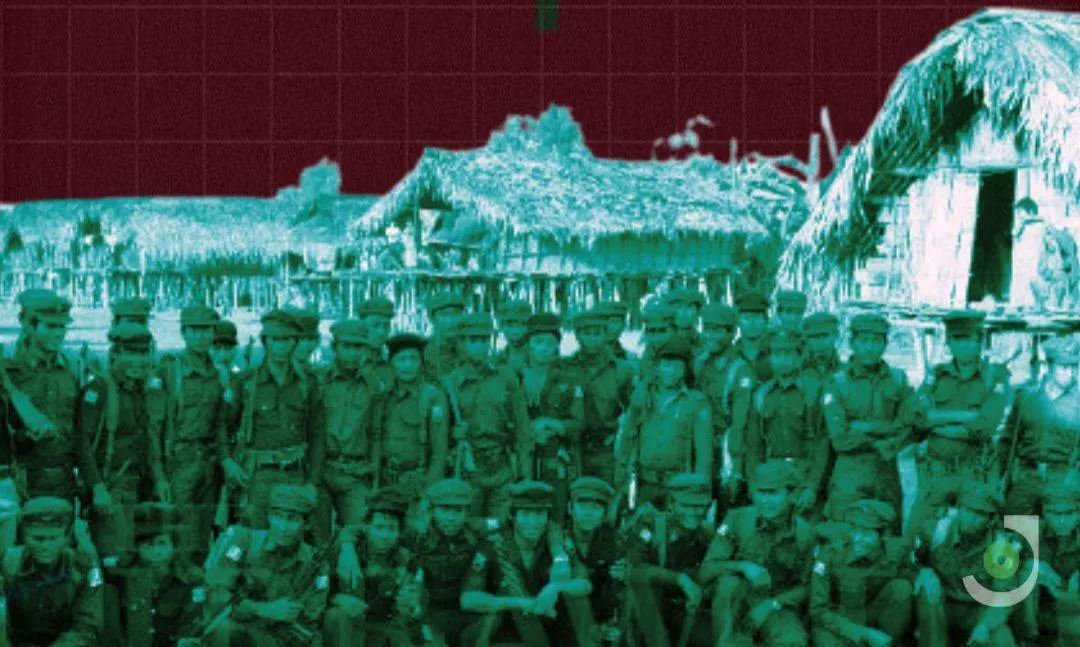
Scattered across the rugged and largely inaccessible hills near the strategic Indo-Myanmar border are camps operated by insurgent organisations such as the People’s Liberation Army (PLA) of Manipur and factions of the National Socialist Council of Nagaland–Khaplang (NSCN-K). These groups have long operated in overlapping geographies and, according to security reports and field accounts, have frequently conducted training in close coordination. Several PLA bases are known to have existed in Myanmar’s Sagaing Region, including locations around Min Thar and Khammoi, areas that have historically served as sanctuaries for Northeast Indian insurgent groups due to difficult terrain and limited state presence.
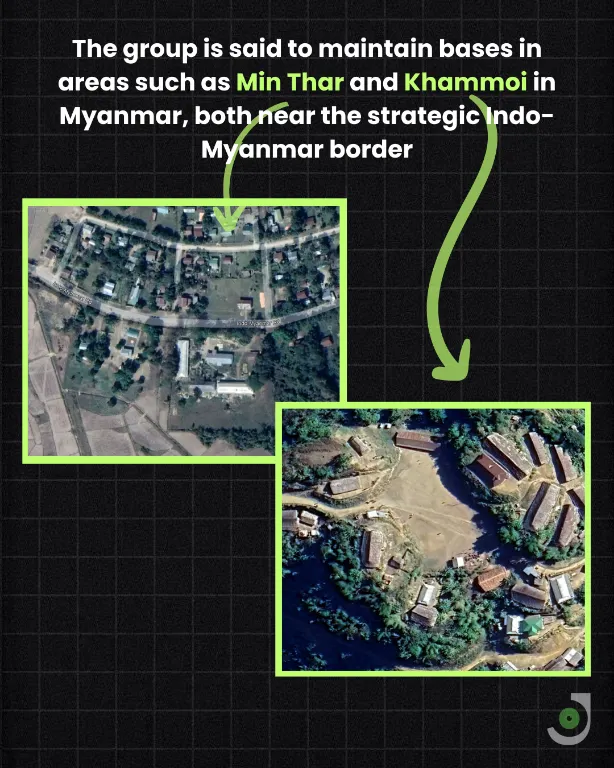
This analysis incorporates open-source intelligence derived from insurgent-released footage, technical imagery and historical accounts to trace the PLA’s networks, capabilities and recent technological adaptations.
The name “People’s Liberation Army” has often prompted comparisons with China’s PLA, a resemblance many have dismissed as coincidental. However, some security analysts note historical links between the Manipur PLA and broader China–Myanmar rebel networks, including claims that the insurgent group once sheltered and accessed arms and training routes in China’s Kunming region as it built its operational capabilities in the 1980s and 1990s.
Moreover, Veteran journalist Bertil Lintner has documented that the PLA of Manipur established ties with Myanmar’s Kachin Independence Army (KIA) during the late 1970s and early 1980s. According to these accounts, PLA cadres received training and logistical support from the KIA, situating the group within a broader transnational insurgent ecosystem operating along India’s eastern periphery.
The group was also, at the time, accused of maintaining links with Pakistan’s Inter-Services Intelligence (ISI), as cited in a confidential report that emerged in January 1991.
The PLA’s organisational influence expanded further in 2011, when it played a key role in forming the Coordination Committee, or CorCom, an alliance of seven valley-based insurgent groups from Manipur, including PREPAK, UNLF, KYKL and the Kangleipak Communist Party. CorCom was designed to coordinate strategy, share resources and execute joint actions against Indian security forces, consolidating the PLA’s position as one of the most influential actors among valley-based insurgent groups.
The technological dimension of this conflict has intensified in recent years. In July 2025, Indian forces reportedly carried out drone strikes on insurgent camps in Myanmar using WARMATE loitering munitions. While official confirmation remained limited, insurgent groups including the PLA and ULFA-Independent publicly acknowledged the strikes and claimed casualties.
In response, the PLA conducted what it described as its first sustained drone campaign against Indian security forces. The operation, named Operation Lang-Ol, was carried out between 10 November and 10 December, though the accompanying propaganda video was released only in early December by the Revolutionary People’s Front (RPF), the PLA’s political and media wing. The footage showed drone-borne attacks on Assam Rifles positions in Manipur and was framed as retaliation for Indian drone strikes on PLA camps in Myanmar.
Crucially, the banned Meitei insurgent group also released a separate technical assessment claiming to analyse debris and components from the WARMATE drones used by India. According to the group, the components matched the same production batches allegedly deployed during Operation Sindoor. While such claims cannot be independently verified, they reflect a growing emphasis among insurgent groups on technical intelligence gathering and narrative warfare alongside kinetic operations.
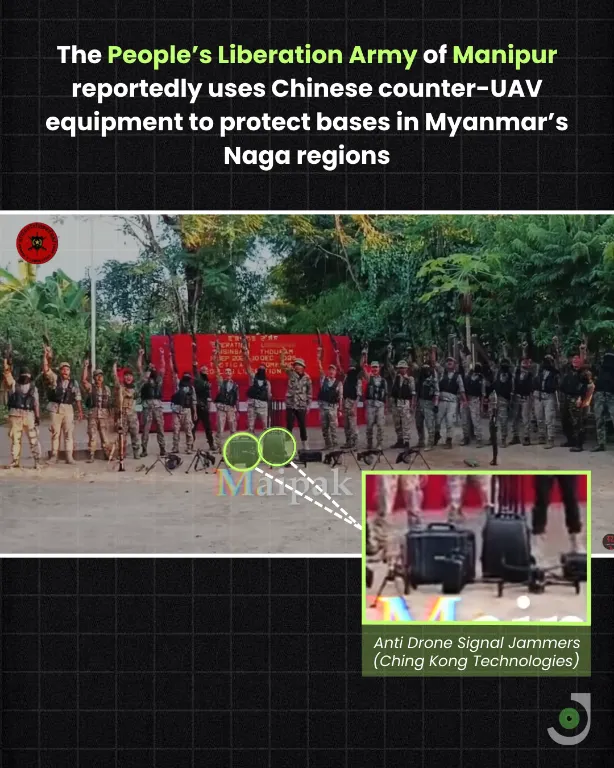
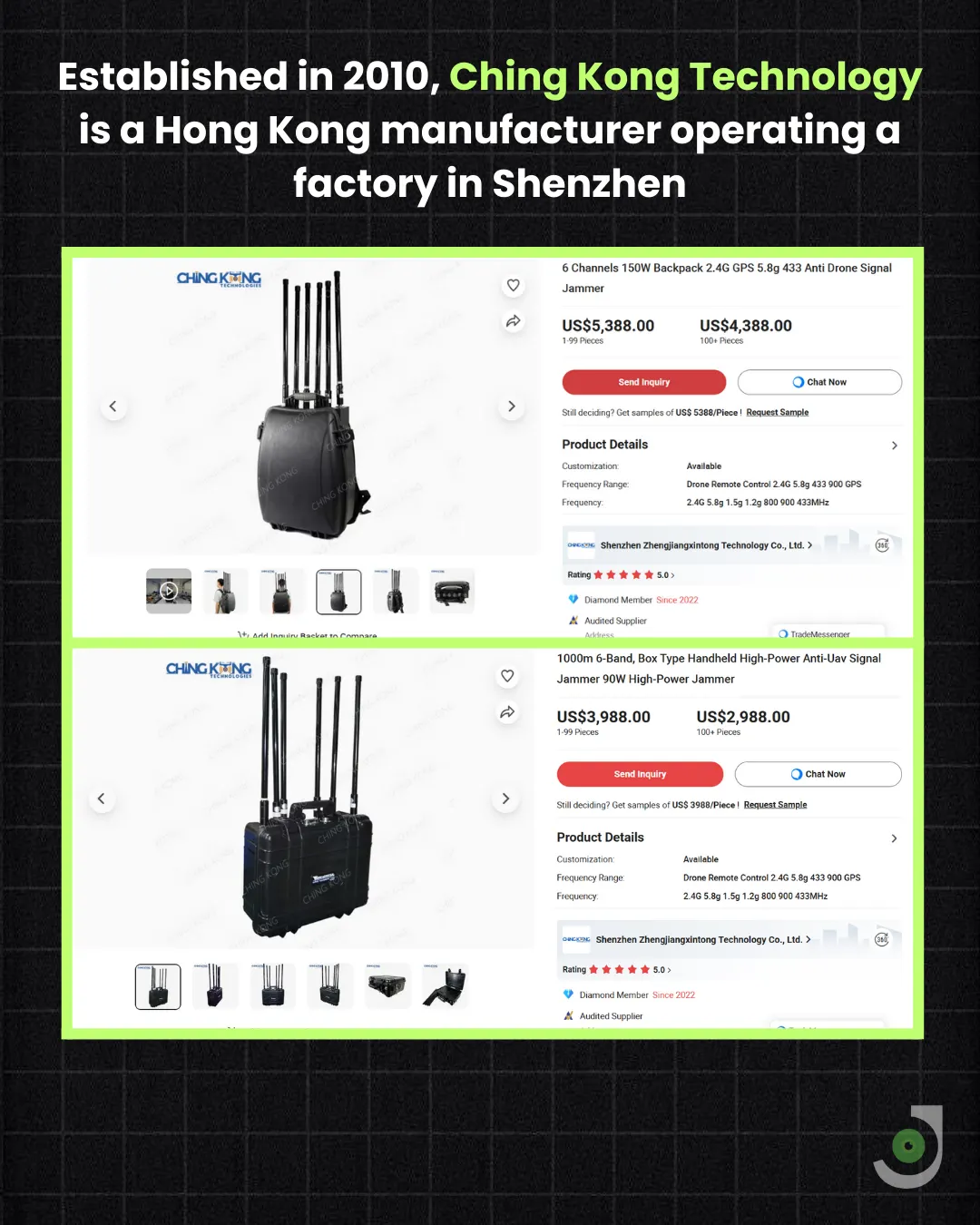
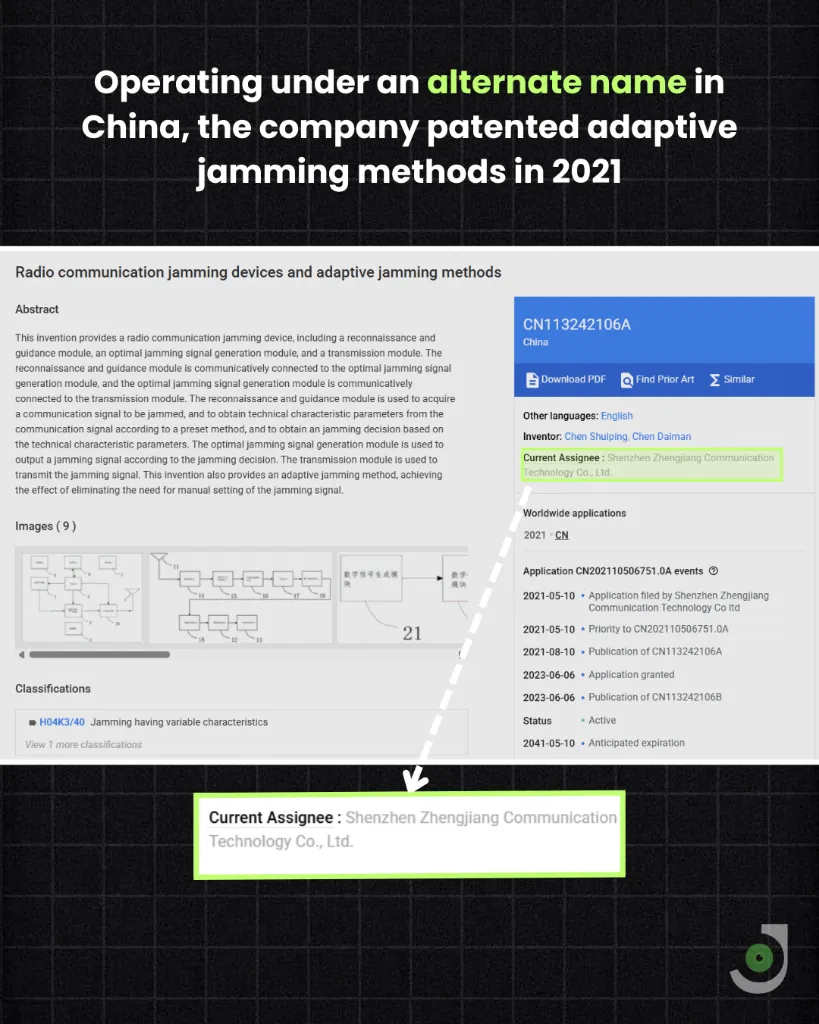
On conducting OSINT examination of the visuals from Operation Lang-Ol, we closely focused on equipment visible in the footage. This analysis identified what appeared to be anti-drone signal jammers employed by the PLA’s so-called 404 Mobile Force. Structurally, the systems closely resemble jamming equipment marketed by Ching Kong Technologies, a Hong Kong-based firm with manufacturing facilities in Shenzhen, China. The company has previously been linked to similar systems appearing in other conflict zones. Amnesty International’s 2024 report on the Sudan civil war documented comparable jamming devices supplied to warring factions, identifying links to the same manufacturer. The company did not respond to Amnesty’s requests for clarification.
These developments underscore a critical operational risk for India. The repeated use of high-end drones and sophisticated munitions against entrenched insurgent groups increases the likelihood of sensitive components being recovered, studied and potentially reverse-engineered. For groups like the PLA, such material offers both tactical insight and propaganda value. In this context, strengthening operational security, limiting recoverable debris and reassessing the deployment of advanced systems in contested environments will be essential to prevent further technological diffusion among non-state armed actors.
Manipur today remains a dense convergence of armed groups, including the PLA, NSCN factions and other valley-based insurgents such as PREPAK and UNLF. This complexity continues to complicate negotiations and ceasefire frameworks, even as the conflict enters an increasingly technology-driven phase.